
Quadrivium
The incarnational study of mathematics is for the sake of knowing God through His works, all which display his beauty, order, and design.
The Quadrivium, the last four of the seven classical liberal arts, is ordered toward a life of Christian philosophy, theology, and worship. It preserves the original natural friendship between science and wonder, with the principle of number serving as a stepping stone to the contemplation of the unity of the entire Cosmos.
Students study number (arithmetic), number in space (geometry), number in time (harmonia), and finally, number in motion, time and space (cosmology). These studies ever remind us of our own limits — that the perfectly Intelligible God who created all things by his Word calls us to know him, yet remains beyond our capacity of perfect comprehension.
Quadrivium I: Arithmetic & Geometry
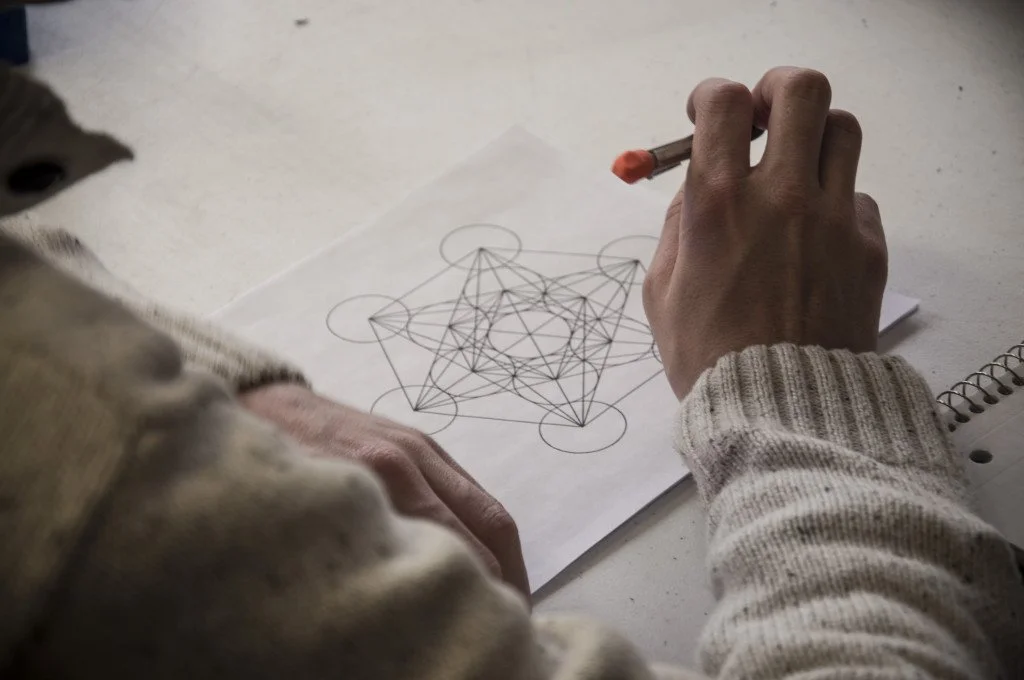
The Fall semester consists of an introductory course in classical arithmetic, i.e., number theory. This course covers formal relationships among the natural numbers exploring the themes of measurement, the one and many, same and other, wholes and parts, and the limited and unlimited.
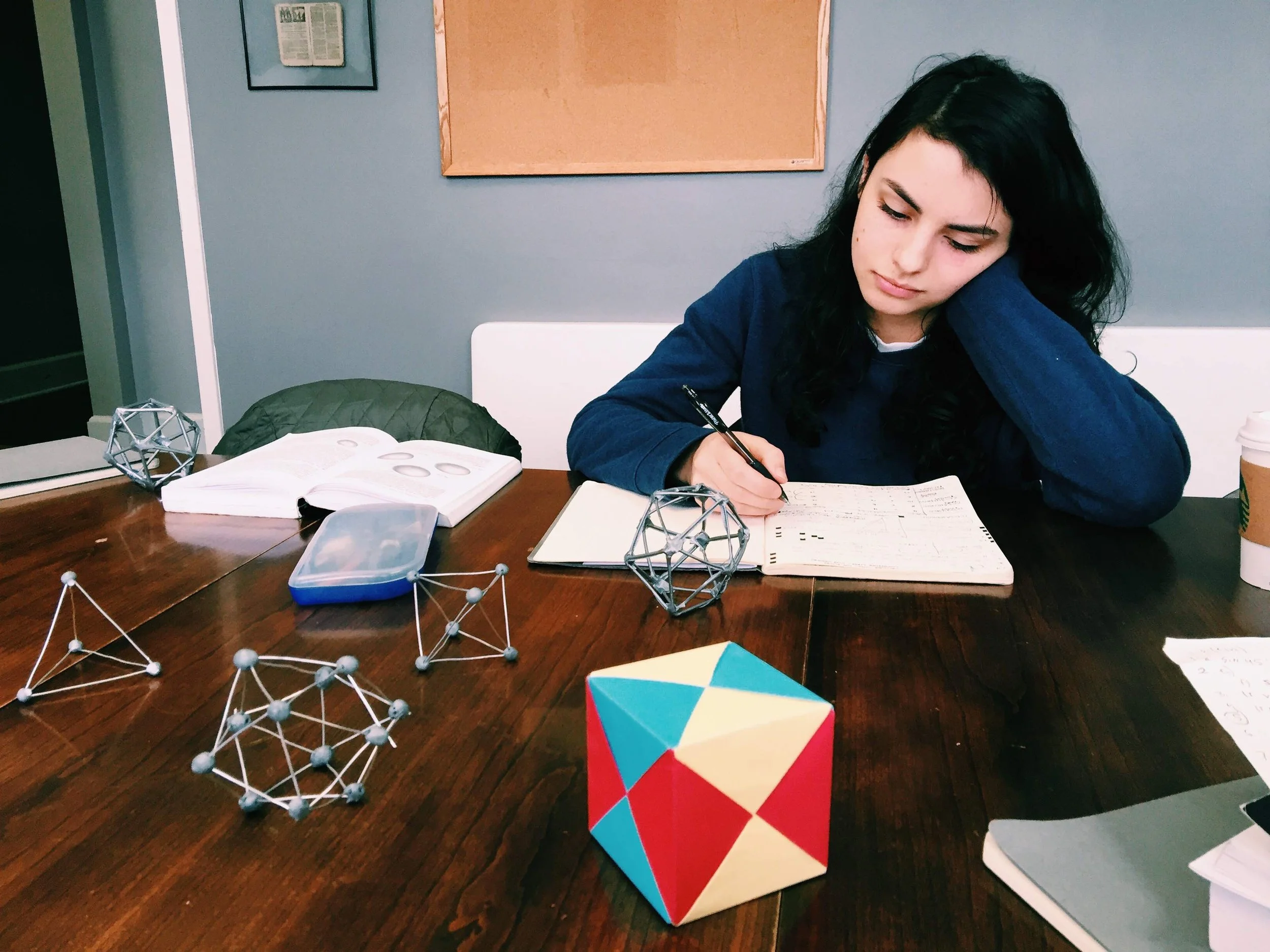
The Spring semester uses Euclid’s Elements as a framework for logical, imaginative, systematic mathematical thinking, taking students on a journey from basic plane geometry, the nature of circles, inscribed figures, magnitude, proportion, and finally three dimensional or solid figure geometry. The course culminates in a study of the Platonic Solids in which the theory of beauty, proportion, and reason serve as an occasion to think about the patterns of creation and the embodiment of abstract ideas.
Quadrivium II: Harmonia & Cosmology
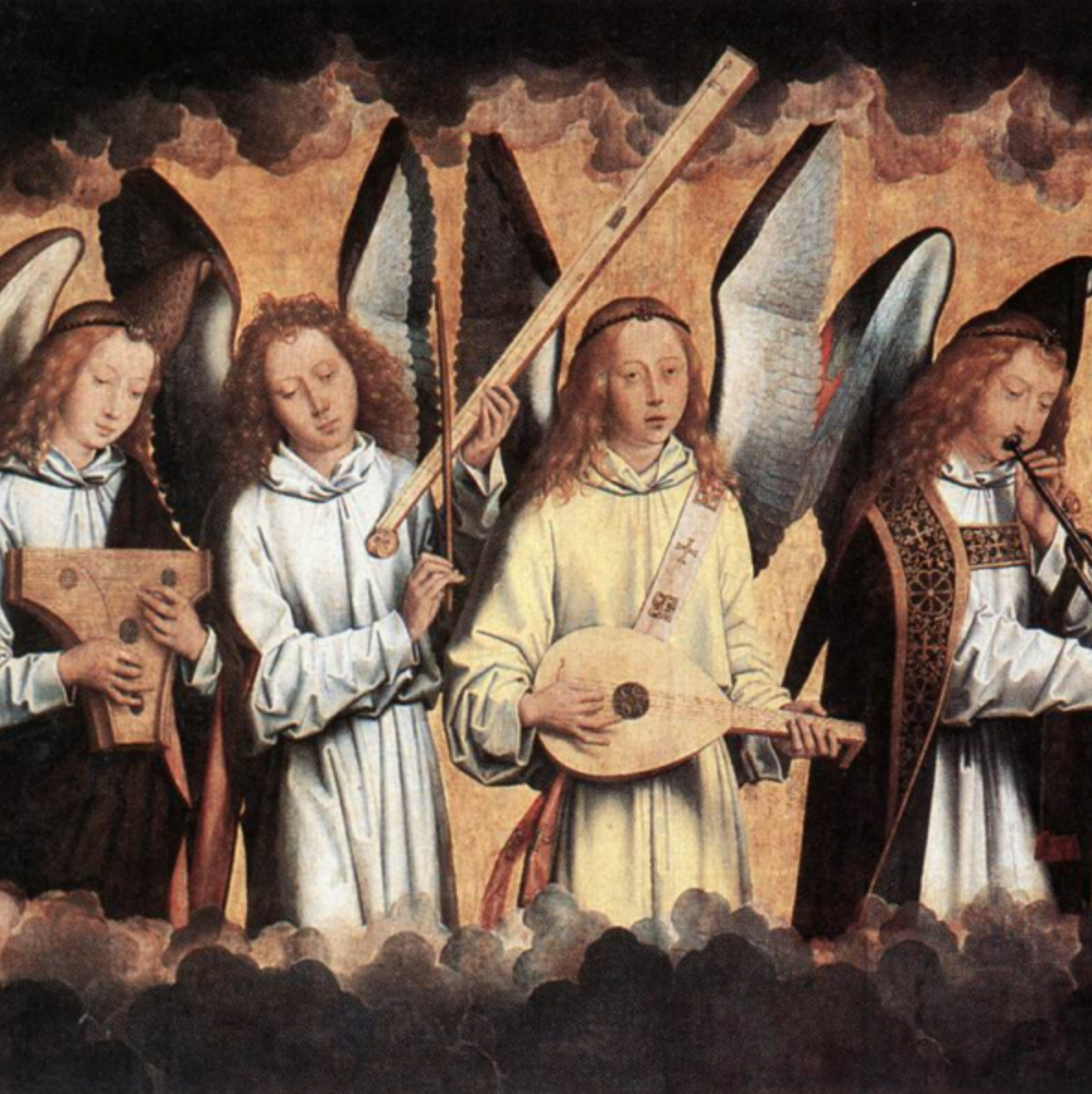
The Fall semester will focus on the principles of ratio and proportion with application in harmonics, trigonometry, and the measurement of change. These mathematical concepts will be in part derived from and applied to music theory, allowing students to continue to explore the nature of measure and relationship, particularly as they study the nature of tone, scale, keys, and other properties of music and harmony.
The Spring semester engages historical readings from the Bible, Plato, Aristotle, Ptolemy, St. Basil, and others in order to explore the vision of the pre-modern cosmos, its structure, beauty, and metaphysical significance. Students will learn to reflect deeply on the phenomena, operations, and order of a Cosmos which has been made to lead us to adoration of its Creator.
Quadrivium III: Arithmetic & Geometry
The Fall semester focuses on algebra from a foundational and philosophic perspective, as an outgrowth of Arithmetic. Students will discuss aspects of the historical development of the number system, a general theory of polynomials, exploring their roots, as well as some elements of ring and field theory and contemporary set theory. Topical themes of measurement, intention, mathematical realism, complex functions, as well as the character of number theory as an analogue or indicator of Divine causality and transcendence will be explored.
The Spring semester explores developments in geometry and algebraic geometry in the ancient and modern periods. Topics related to boundedness, continuity, and wholeness will be explored, as well as the continuous and discrete, commensurability and incommensurability, the rational and irrational.
Quadrivium IV: Harmonia & Cosmology
In the Fall semester, concepts which were developed in the Ratio and Analysis courses will be deepened, such as the derivation of trigonometric solutions to differential equations for acoustic applications. From these mathematical principles, the study of Harmonia will be enhanced in the art of music encompassing the spiritual, ethical, and cosmic elements of harmony as studied through the principles and practice of music.
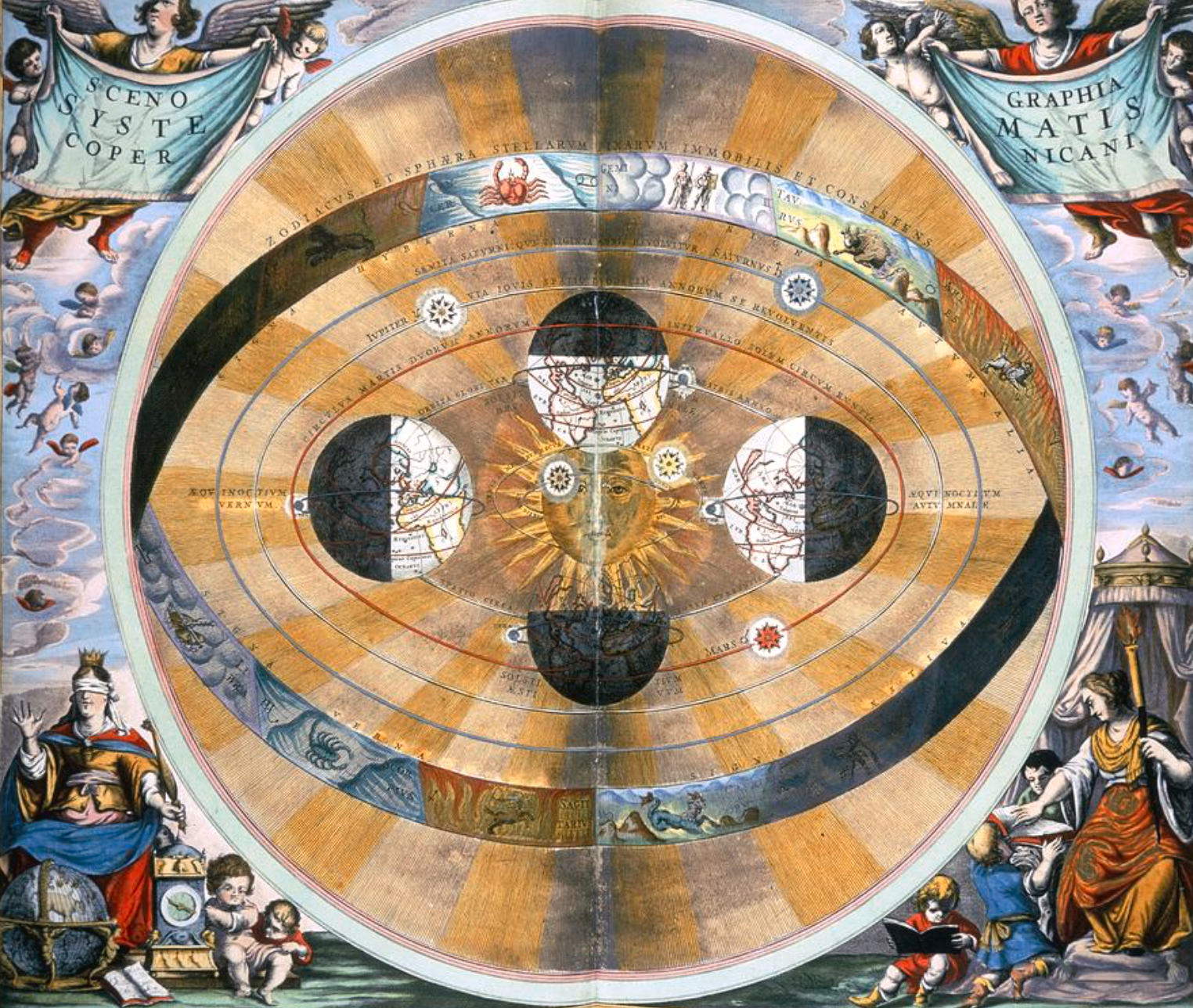
In the Spring semester, cosmology allows students to consider the challenges of what it might mean to give a unified account of the entire creation—to not only intuit or believe, but scientifically understand the unity of the uni-verse. This course will ask the students to seek an understanding and application of logic, precision, beauty, and experiment in the physical sciences, to provide logical demonstrations of scientific systems, and study how great thinkers envision the universe within an acceptable logical structure. Authors read may include Copernicus, Kepler, Galileo, Descartes, Newton, Leibniz, Faraday, Maxwell, Einstein, and Heisenberg.