
ACADEMICS
Overview of the Academic Program
New College Franklin offers a B.A in the Liberal Arts. Under the lordship of Christ, New College Franklin forms faithful Christians in the full classical liberal arts tradition, equipping them with wisdom, virtue, and the courage to lead and serve in their homes, churches, and communities. With the exception of preceptorials, all students take the same courses. Therefore, all of the classes are core curricula, and we believe that this core prepares each student to seek his or her individual calling. Once the strong foundation of a full liberal arts education is laid, students are prepared to pursue their callings in light of the questions and ideals common to all humanity. Additionally, we encourage students to shape projects, papers, and the Capstone Project to coincide with their vocational callings and interests.
Truth is by nature one, universal, and indivisible because the ultimate truth is Jesus Christ. Jesus Christ is the Logos, the one Word of God through Whose light knowledge is possible (John 1:3-4). Truth is the Word—a united whole—therefore, it is essential that the curriculum of New College Franklin reflects this unity. Every fact, idea, symbol, or sign exists in relationship to universal truth. Every part of the curriculum is interrelated and helps the student seek, know, and experience truth. While there are facets of the curriculum as varied as Greek grammar and Euclidean propositions, every part serves the whole.
-

Moral Philosophy
Moral Philosophy studies the historical progression of major questions and ideas by examining great texts of literature, philosophy, and history.
-

Theological Studies
Theological Studies trains students as disciples of Christ through the study of Biblical languages and historical, practical, Biblical, and systematic theology.
-

Trivium
The Trivium, comprised of grammar, logic, and rhetoric, trains students in the habits of reasoning, writing, and the practice of adorning truth with beauty and clarity.
-

Quadrivium
The Quadrivium, comprised of arithmetic, geometry, harmonia, and cosmology, is founded on the belief that God reveals Himself through the beauty, order, and design of His world.
-
Applied Studies
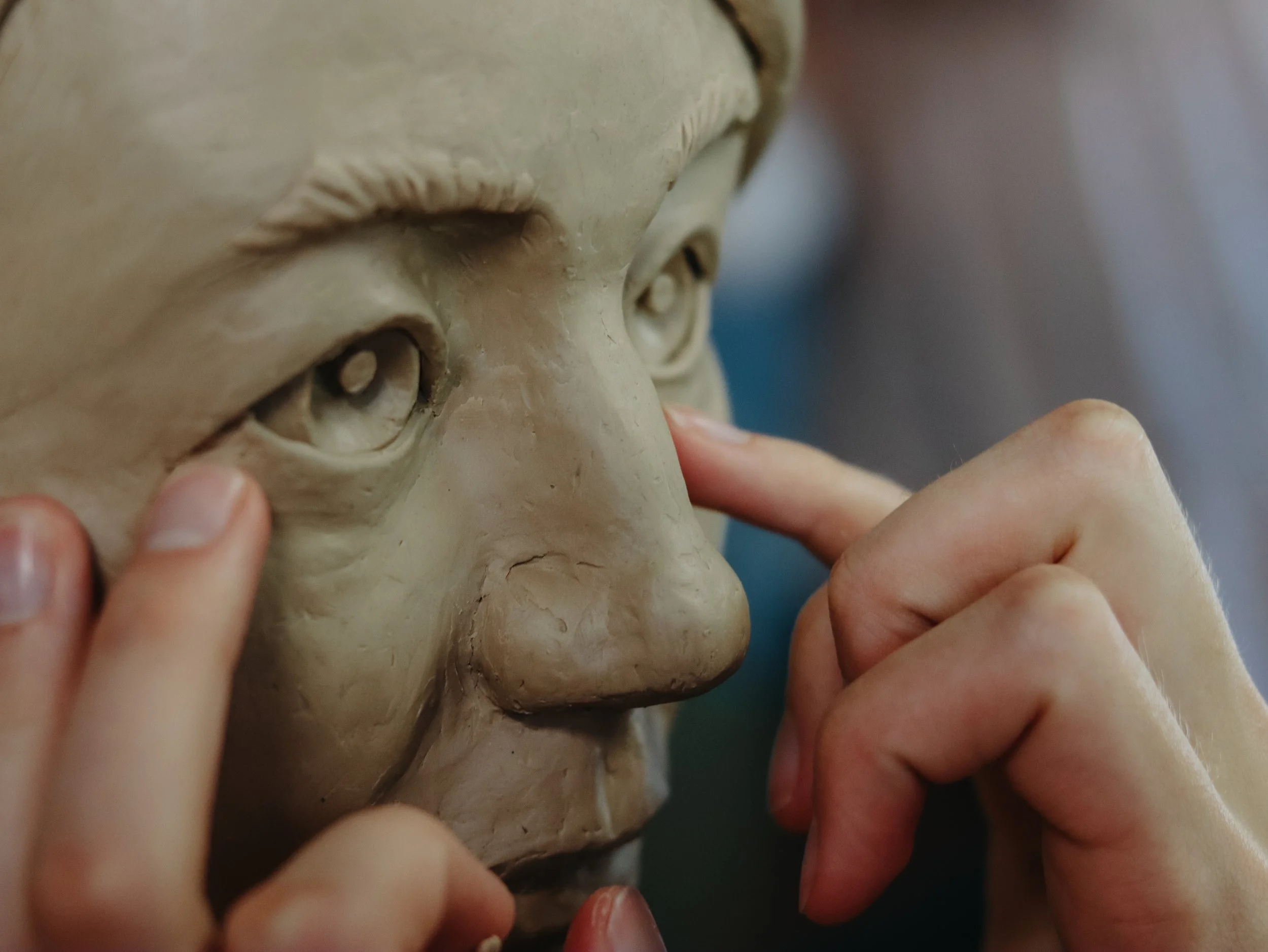
Applied Studies articulate the complex relationship between faith, learning, and practice by means of artistic mediums, preceptorials, and the Senior Capstone Project.
PHILOSOPHY OF EDUCATION
We believe in word-centered education that involves reading and processing ideas verbally for the purpose of integration into life practice.
We believe in word-centered education that involves reading and processing ideas verbally for the purpose of integration into life practice.
We believe that discussion-based instruction enables professors to carefully guide a student in their thinking and this has greater effect and longevity than lecture-based methodology.
We read and talk about ideas to gain wisdom for life, but empty philosophy is self-centered and ultimately useless. The Apostle John tells us, “By this we know love, that he laid down his life for us, and we ought to lay down our lives for the brothers” (I John 3:18). We are called to imitate Christ in our deeds, not just our words. The true purpose of reading and talking is to discern what constitutes right action. We read great works of literature, history, and philosophy, and discuss the ideas in these works, evaluating all claims to wisdom and truth with the purifying fire of the Word of God. In this way, our word-centered education is fundamentally the pursuit of wisdom and virtue in the imitation of Christ.
True intellectual growth is only possible with corresponding spiritual growth, for wisdom comes from the fear of the Lord and as a gift of grace.
Education is a communal activity in which we learn from one another, spur one another on to love and good deeds, and provide accountability.
A student becomes like his master; therefore, the sharing of life together in discipleship and mentoring is an essential component in learning.
Life is body, mind, and spirit, and education must engage more than the mind and more than the classroom.
Wisdom seeks to provide knowledge and understanding to the various passions and gifts that God has given for the purpose of greater clarity and service.
We believe that discussion-based instruction enables professors to carefully guide a student in their thinking and this has greater effect and longevity than lecture-based methodology.
We have much to learn through the tried and true ways embodied in the great minds of the past; therefore, we unapologetically study ancient texts for present application.
Discussion-based instruction and charitable conversation provides an ideal environment for those more mature in the faith to be guided along the path to knowledge and wisdom. Wisdom is difficult, and only those who desire her will have the necessary persistence and focus to obtain her. The Gospels are filled with the phrases, “Jesus asked his disciples,” “Jesus answered his disciples,” and “Jesus told his disciples.” Jesus’ disciples received the blessing of conversation. Conversation brings the ideas from the page into the mind and heart and transforms information into knowledge. Conversation fosters community and discipleship by tailoring conversation for the specific intellectual and spiritual growth of particular hearts and minds.
We believe that true wisdom causes us to respond to the wonder of God’s creation and providence with gratitude and awe.
True intellectual growth is only possible with corresponding spiritual growth, for wisdom comes from the fear of the Lord and as a gift of grace.
Grace is a key principle that shapes our attitude toward education. Out of His grace, God has blessed us with a holy fear of Him, which is the beginning of wisdom. This understanding fundamentally redefines intellectual pursuits. The writer of Proverbs exhorts us to get wisdom and get understanding (Proverbs 4:7). This means that intellectual growth is an act of obedience, but an act of obedience we are only able to fulfill because we have been given the gift of the fear of the Lord. The principle of grace, therefore, instills Christian education with an attitude of humility and reverence.
Education is a communal activity in which we learn from one another, spur one another on to love and good deeds, and provide accountability.
New College Franklin is a community of learners, growing together, serving, and providing accountability. The fellows, students, administration, and staff are all learners. As we grow in grace and try to learn, we come to understand more fully that wisdom and service are inextricable. As Jesus said, “Do you understand what I have done to you? You call me Teacher and Lord, and you are right, for so I am. If I then, your Lord and Teacher, have washed your feet, you also ought to wash one another’s feet. For I have given you an example, that you also should do just as I have done to you. Truly, truly, I say to you, a servant is not greater than his master, nor is a messenger greater than the one who sent him. If you know these things, blessed are you if you do them” (John 13:12-17). As learners in a community, we have a responsibility to regard each other as brothers and sisters, encouraging each other in doing good. Whenever we fail to hold a brother or sister accountable, we treat that one as an enemy (II Thessalonians 3:13-15).
A student becomes like his master; therefore, the sharing of life together in discipleship and mentoring is an essential component in learning.
Fellows and students at New College Franklin walk together in a discipleship and mentoring relationship. College is one of the most exciting, tumultuous, and dynamic times in a person’s life. This allows great opportunity for growth in wisdom. Mentoring and discipleship provide a measure of protection by means of dialogue and accountability. This model also recognizes the basic truth that the teacher shapes the student. Remembering Jesus’ rhetorical question, “can a blind man lead a blind man?” reminds us how important it is to choose our teachers carefully.
Life is body, mind, and spirit, and education must engage more than the mind and more than the classroom.
The college as a community of learners is part of a larger community. The church and the families that comprise the church provide opportunities for growth, service, and accountability. Just as a liberal arts education is training for all of life, all of life is part of a liberal arts education. Community engagement is part of the definition of “pure and undefiled religion in the sight of our God,” which is to “visit orphans and widows in their distress, and to keep oneself unstained by the world” (James 1:27). It is also important for students to engage life outside the college doors. The relationships forged in college are some of the most enduring, and these bonds are strengthened by time spent together in extra-curricular activities. An essential part of developing a sense of wonder about God’s creation is to be out in it. Hiking, collegial games, and our own peculiar sports deepen that sense of collegial community and transform the hills of Middle Tennessee and the stars in the night sky into a grand classroom.
Wisdom seeks to provide knowledge and understanding to the various passions and gifts that God has given for the purpose of greater clarity and service.
An essential part of Christian education is repentance. We must repent of the idea that we exist to serve ourselves. We exist to worship, and service is central to worship. Paul tells the church in Rome to “present your bodies as a living sacrifice, holy and acceptable to God, which is your spiritual worship. Do not be conformed to this world, but be transformed by the renewal of your mind …” (Romans 12:1,2) He goes on to remind everyone among them “not to think of himself more highly than he ought to…” for, “having gifts that differ according to the grace given to us, let us use them.” Our gifts are not for our own benefit, but to benefit those around us. The only way we can know the source and right use of our gifts is by the renewal of our minds.
We have much to learn through the tried and true ways embodied in the great minds of the past; therefore, we unapologetically study ancient texts for present application.
C.S. Lewis warned us of the dangers of intellectual provincialism. In his Introduction to Athanasius’s On the Incarnation, Lewis says that our characteristic blindness of the present is only made worse “if we read only modern books… The only palliative is to keep the clean sea breeze of the centuries blowing through our minds, and this can be done only by reading old books. Not, of course, that there is any magic about the past. People were no cleverer then than they are now; they made as many mistakes as we. But not the same mistakes.” We are not trying to revive the past, but to learn from it.
We believe that true wisdom causes us to respond to the wonder of God’s creation and providence with gratitude and awe.
Ultimately, all of our endeavors should seek to glorify God and to enjoy Him forever. The educated man who is puffed up with knowledge has not been led out of darkness. As students grow in knowledge, understanding, and wisdom, they gain a clearer view of who they are, who God is, and what the world is. This vision reorients the student’s attitudes and results in humble thankfulness and reverent awe.
PEDAGOGY
New College Franklin utilizes several traditional methodologies appropriate to different aspects of the curriculum. The Shema in Deuteronomy is formative for our pedagogy: “Hear, O Israel: The Lord our God, the Lord is one. You shall love the Lord your God with all your heart and with all your soul and with all your might. And these words that I command you today shall be on your heart” (Deut.6:4-6). The Shema calls us especially to words. Therefore, the majority of our methodologies revolve around words, emphasizing the great books of Western civilization for the sake of knowing the God who is One. As a community of learners, fellows and students together, we gather around these books to pursue knowledge and wisdom.
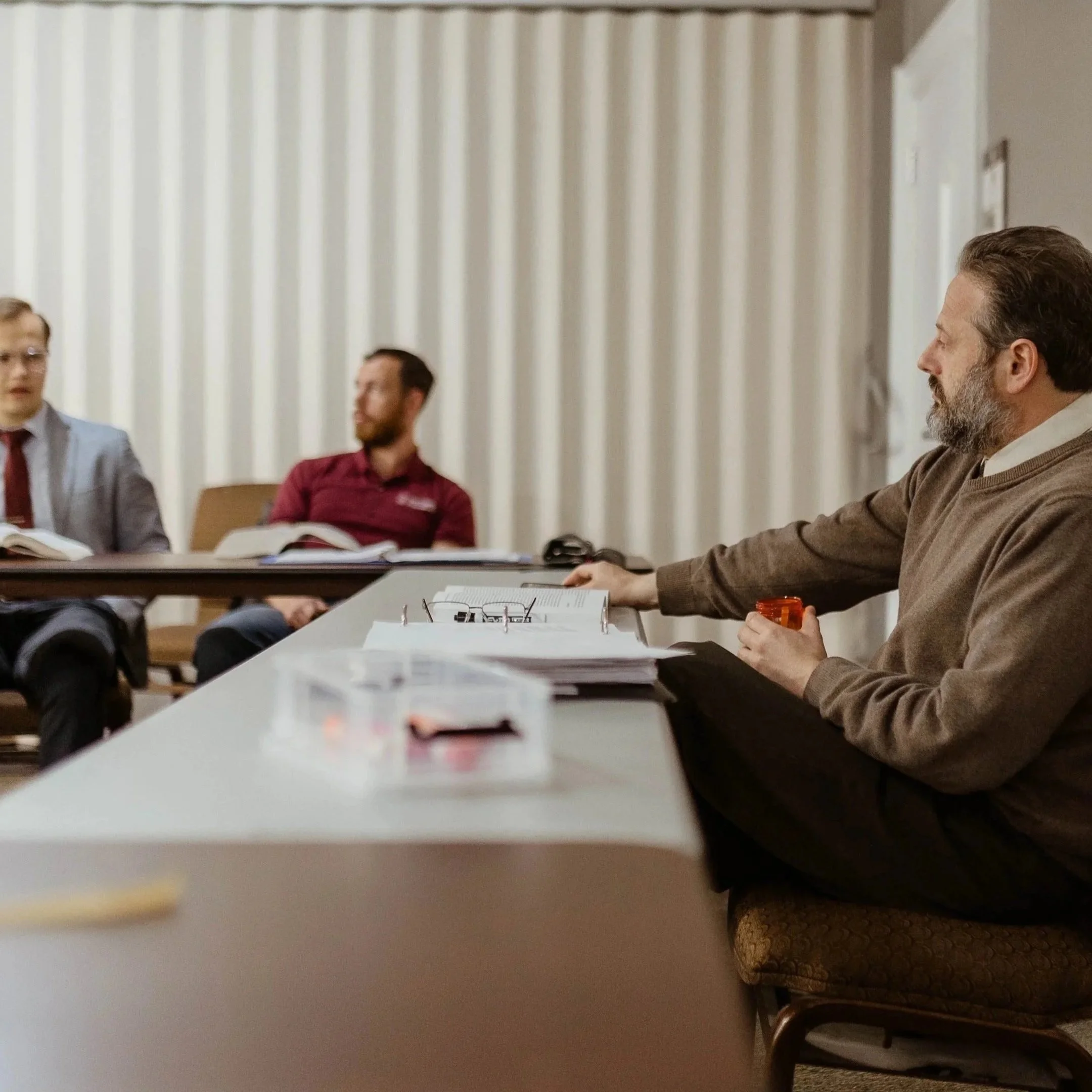
New College Franklin follows the British model that emphasizes residential academic life: a collegiate way of academics that encourages students to live in community, engaged in the life of the local community. In following these principles, New College Franklin uses traditional academic terms of fellow and seminar. Fellows are faculty scholars in residence. A fellow is first and foremost a teacher and mentor, not primarily a specialist. A seminar is a discussion-based class centered around a broad topic or more extensive reading.
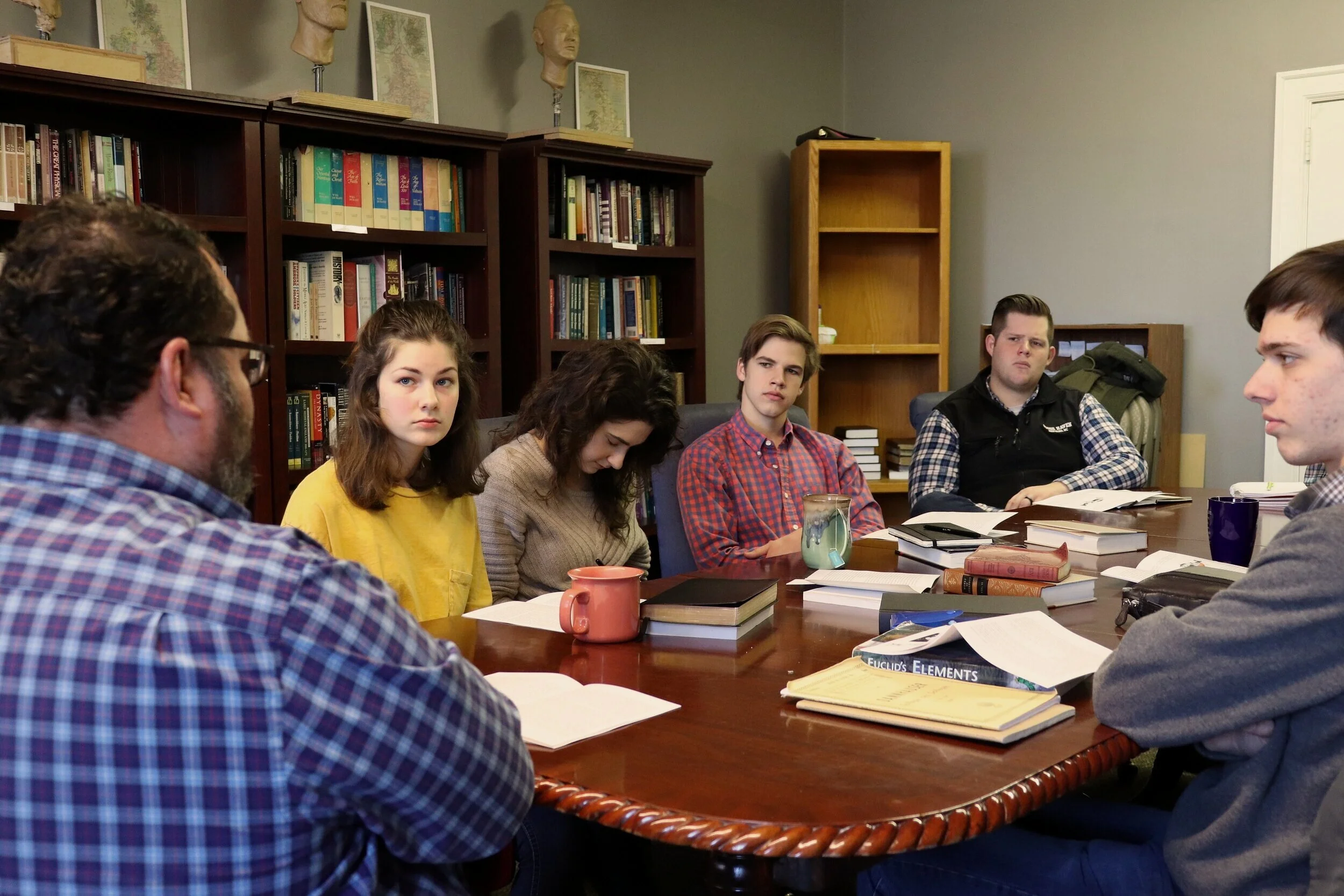

As a college, we structure our academic experience the traditional seminar. This format is flexible and discussion-based to allow fellows and students to interact in a way that is conducive to the texts and ideas. The seminar is a rigorous discussion-based class in which students are required to participate in a Socratic discussion on a common reading.

Our pedagogy begins with the relationship between students and fellows. We do not position our fellows before students as the source of knowledge but as experienced guides to knowledge. Fellows and students learn together, side by side, and the key distinction between these two learners is that fellows are farther along the path to knowledge and wisdom. Their lectures, questions, and guidance reflect their experience, but even the fellow’s experience is not the source of knowledge. Fellows and students gather “to hear the Lord is one” and to put these words on their hearts.

Knowledge of the Lord is impressed from fathers to children, from fellows to students, as they talk, walk, and even rest (Deut. 6:6-9). The knowledge of the Lord is to be bound to our minds, to flow from our hands and be manifest in the domesticity of hearth and home. This knowledge includes the responsibility to respond to the call to serve others, and should demonstrate commitment to service and civic engagement. There is no end to the study of the Lord and to loving God and loving your neighbor.

Seminars may discuss large or small readings in one class, and the goal in these cases is to read and discuss on a macro or micro-exegesis level. The Moral Philosophy interdisciplinary seminar is a special example of this macro-exegesis that integrates the disciplines of history, literature, theology, philosophy, art and music all within one seminar. The seminar provides the opportunity to disciple students in the academic process through means of discussion-based learning, integration, and application that adapts to individual needs.
Model Four-Year Plan for the Bachelor of Arts Degree
FRESHMAN YEAR
Courses:
Moral Philosophy 1: Foundations (4, 4)
Theology Seminar (3, 3)
Humane Letters (3, NA)
Logic (NA, 3)
Quadrivium I: Arithmetic, Geometry (3, 3)
Music (3, 3)
Semester Total: 16
Year Total: 32
JUNIOR YEAR
Courses:
Moral Philosophy 3: Medieval & Renaissance World (4, 4)
New Testament Greek (3)
Ora et Labora (3)
Creative Writing (3, 3)
Quadrivium III: Arithmetic, Geometry (3, 3)
Preceptorials (2, 2)
Introduction to Senior Capstone (1)
Semester Total: 16
Year Total: 33
SOPHOMORE YEAR
Courses:
Moral Philosophy 2: Antiquity (4, 4)
New Testament Greek (3, 3)
Rhetoric (3, 3)
Quadrivium II: Harmonia, Cosmology (3, 3)
Art (3, 3)
Semester Total: 16
Year Total: 32
SENIOR YEAR
Courses:
Moral Philosophy 4: Modernity (4, 4)
Sacred Theology (3, 3)
Quadrivium IV: Harmonia, Cosmology (3, 3)
Poetics (2)
Preceptorials (2, 2)
Senior Capstone (1, 1)
Semester Total: 14
Year Total: 28